
.png)
The version of AI in education most people are familiar with is not very interesting. It answers questions. It generates worksheets. It gives students more content when they get things wrong.
But, the challenge for teachers is rarely a shortage of content, or even data. It’s a shortage of actionable insights when they need them - to understand not just what a student got wrong, but why.
Enter Eedi’s Diagnostic Questions.
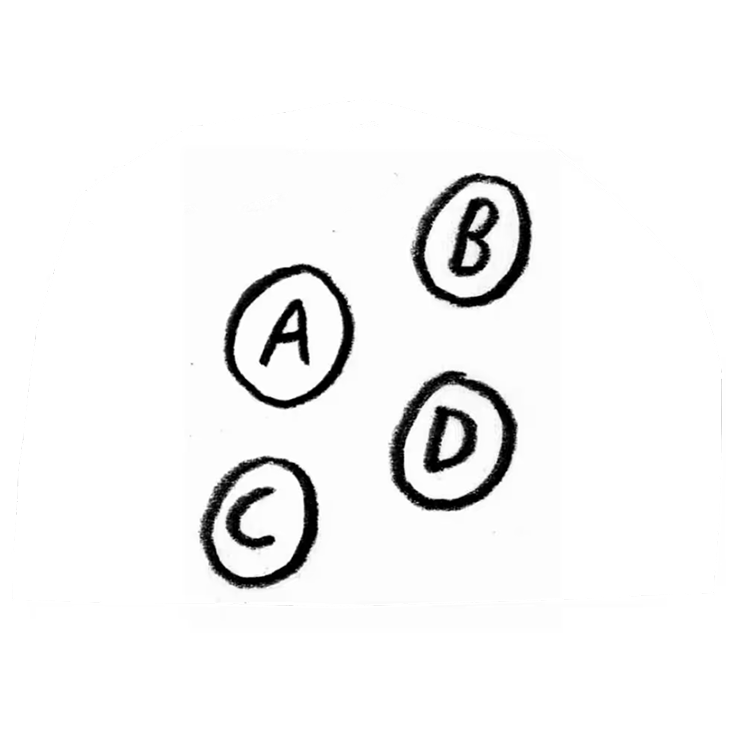
In many assessment questions, wrong answers are just noise. In an Eedi Diagnostic Question, every wrong answer is deliberately designed to surface a specific misconception. The answer a student picks gives a precise insight into how they're thinking. A student who picks wrong option A has a different knowledge gap from the student who picks C, and those gaps require different responses.
Eedi has been building its library of Diagnostic Questions for more than a decade. It was authored by our in-house specialists in mathematics education and each question was engineered to identify the specific misconceptions we see in our hundreds of millions of student responses. That work predates Gen AI, and as the research shows, is important to the field of maths teaching, regardless of what technology sits on top of it.
A 2021 peer-reviewed study co-authored by Eedi's Craig Barton, published with Foster, Woodhead, and Clark-Wilson, analysed data from over 7,000 UK school maths students and found the first evidence of the hypercorrection effect in a real school mathematics context. In summary, it showed that errors a student made with high confidence are more likely to be corrected by them than errors made with low confidence. The research showed that trying to prevent students from making mistakes may actually be counterproductive while allowing them to commit to an answer and then exploring the knowledge gap it exposes turns out to be a more effective route to durable learning. For teachers, Diagnostic Questions are the instrument that makes this durable learning possible.
Eedi is thrilled to have collaborated with Anthropic on their Claude for Teachers launch. Through an MCP integration, Eedi teachers can now directly access our Diagnostic Questions within Claude, describing what they need in plain language and getting the right questions back, along with the correct answer and the specific misconception each wrong answer is designed to surface. Claude’s intelligent search layer makes it easy for teachers to find the right content for their students and their teaching. A teacher describes a misconception they observed in class, names a topic or curriculum standard, and gets back the most relevant questions. No manual searching required.
What diagnostic questions make visible is something that most educational technology leaves invisible: the specific shape of a student's misunderstanding. For example, a student who has confused the words ascending and descending may have a literacy-based knowledge gap rather than a numeracy-based one, and that distinction changes everything about what the teacher does next. We are delighted to be collaborating with the Anthropic team to make this free resource available to all teachers around the world.
Eedi teacher accounts are free. Teachers can access Eedi's diagnostic questions through Claude at eedi.com/mcp, or create a free account at eedischool.com.
Eedi teacher accounts are free. Teachers can access Eedi's diagnostic questions through Claude at eedi.com/mcp, or create a free account at eedischool.com.